
PrimusGFS audit readiness and common non-conformities
PrimusGFS Audit Checklist: How to Prepare and What Auditors Verify
Short answer: A PrimusGFS audit verifies that an operation’s Food Safety Management System is documented, implemented and effective, and that site conditions match the documents. To prepare, confirm the applicable modules, complete an internal audit against the current checklist, close previous corrective actions, and make sure records for the last 12 months are complete, signed and retrievable.
Most audit findings are not caused by missing programs. They are caused by gaps between what the program says and what records and site conditions show. This checklist is organized around what auditors verify.
Step 1: Confirm your audit scope
PrimusGFS audits combine a common Food Safety Management System (FSMS) module with the modules that apply to the operation’s activities: farm, indoor agriculture, harvest crew, facility (GMP), HACCP or preventive controls. Confirm with your certification body:
- Which modules and audit types apply to each site
- Which products and processes are in scope
- Whether the audit is announced or unannounced
- Which version of the standard will be used
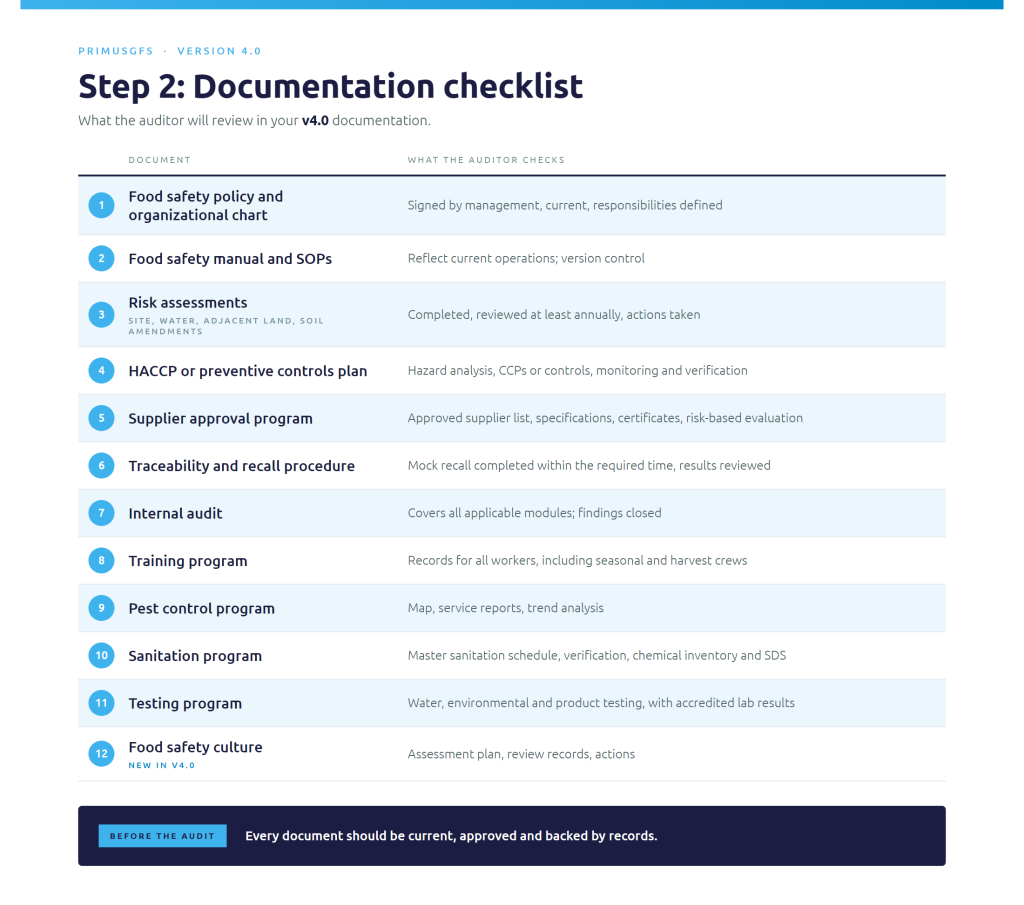
Step 3: Records checklist (last 12 months)
- Monitoring logs complete, signed and dated, with no blank fields
- Corrective actions documented with root cause and verification
- Water test results and actions on out-of-specification results
- Cleaning and sanitation logs that match the master schedule
- Calibration records for thermometers, scales and other equipment
- Visitor and contractor logs
- Training attendance with content and date
- Complaint log and follow-up
Step 4: Site conditions
Auditors walk the operation and compare it with the documents. Before the audit, check:
- Hand-washing stations stocked and functional; toilets clean and serviced
- No evidence of pest activity; bait stations in place and mapped
- Chemicals stored, labeled and segregated from product and packaging
- Glass and brittle plastic controlled; damaged items replaced
- Product contact surfaces clean and in good repair
- Workers following hygiene rules: hair restraints, jewelry, eating areas
- Harvest equipment clean, maintained and protected during transport
The most frequent non-conformities
Across fresh produce audits, findings tend to concentrate in the same areas:
- Incomplete or unsigned records, especially monitoring and corrective action logs
- Risk assessments not reviewed or not updated after changes in the operation
- Water management gaps: missing source assessments or no action on results
- Mock recalls not completed or not completed within the required time
- Training records missing for seasonal workers or harvest crews
- Chemical control: missing SDS, unlabeled containers or poor segregation
- Supplier program: approved suppliers without current certificates
Certain findings, such as falsification of records or evidence of actual product contamination, can result in automatic failure of the audit regardless of the overall score.
Planning the audit day
- Schedule during active operations, so auditors can observe the processes in scope
- Assign a coordinator who knows where every record is filed
- Prepare a room with access to digital and paper records
- Brief supervisors so they can explain their tasks and controls
- Hold a closing meeting and record all findings and deadlines
PrimusGFS certification with Control Union
Control Union certifies farms, greenhouses, harvest crews, packinghouses, coolers and distribution centers under PrimusGFS. A pre-assessment is available before the certification audit, and we schedule around harvest seasons.