
USDA Organic and PrimusGFS: Combined Certification
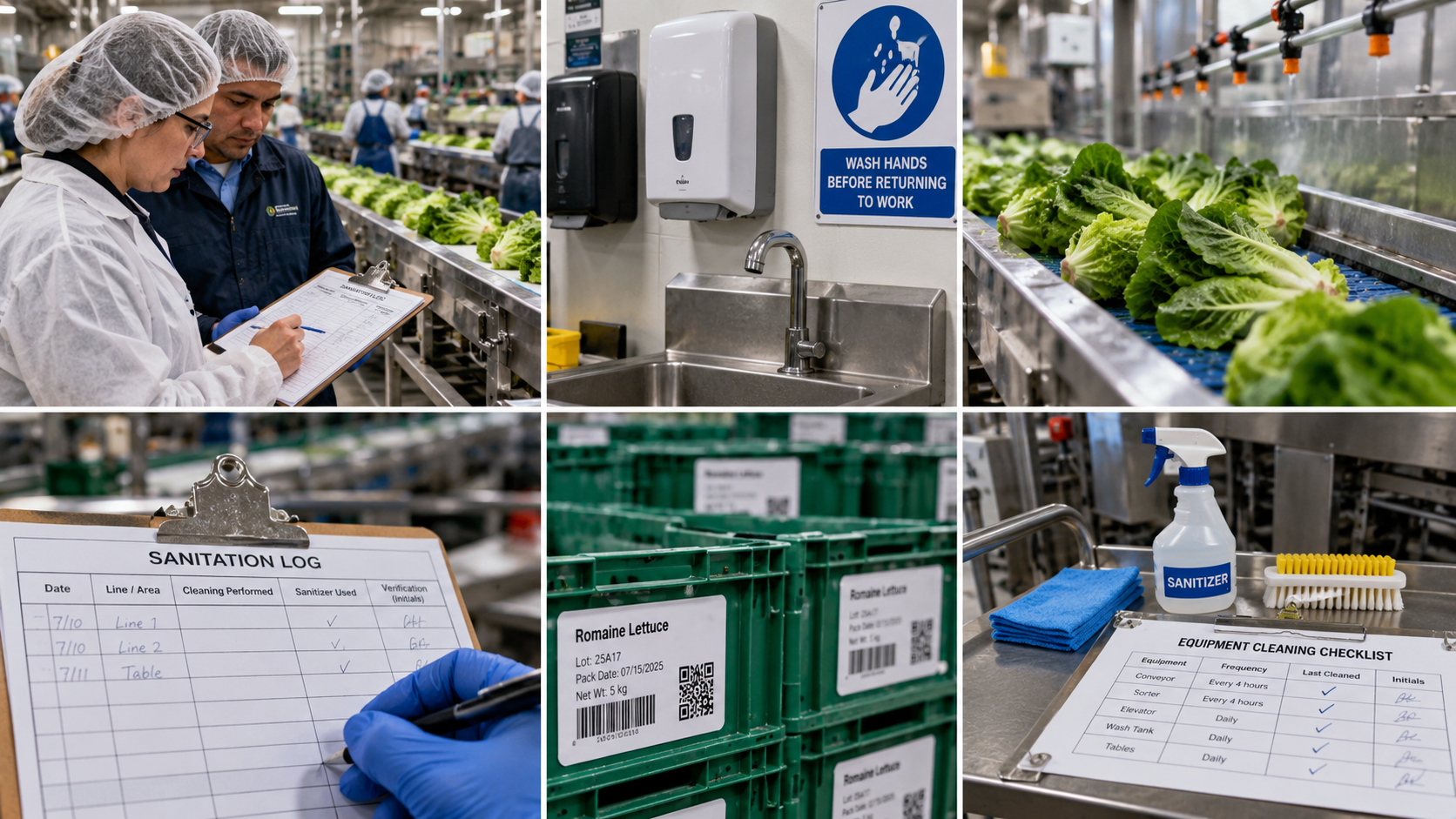
USDA Organic and PrimusGFS: One Supplier, Two Standards, One Inspection
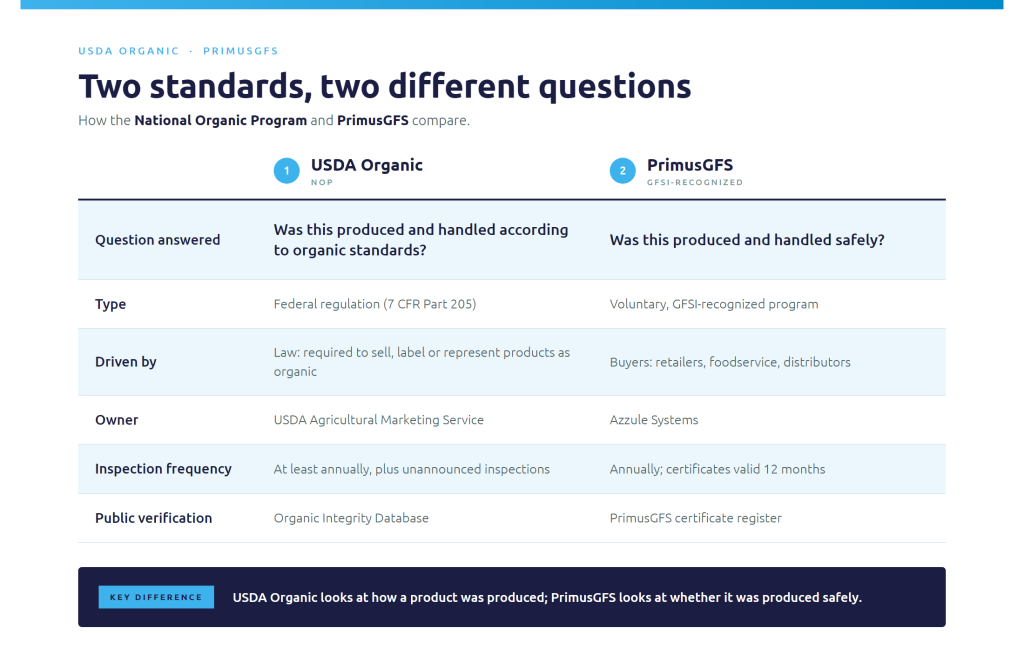
Short answer: Organic fresh produce suppliers selling to U.S. retailers usually need two certifications: USDA organic, which verifies how the product was produced and handled, and a GFSI-recognized food safety certification such as PrimusGFS, which verifies that it is safe. The standards share traceability, supplier control, pest control and sanitation requirements, so a single certification body can inspect both in one combined visit.
Organic produce is the largest category in the U.S. organic market: $22.7 billion in 2025, nearly 30% of all organic sales, according to the Organic Trade Association’s 2026 Organic Market Report. Buyers of that produce expect both the organic claim and the food safety system to be independently verified.
Where the standards overlap
Both standards require evidence that the operation controls its supply chain and its site. The main overlaps are:
- Traceability. Organic requires trace-back to the last certified operation and mass balance. PrimusGFS requires traceability and mock recalls, aligned in v4.0 with FSMA 204.
- Supplier control. Organic requires verifying the certified status of suppliers. PrimusGFS requires an approved supplier program with risk-based evaluation.
- Pest control. Both require a documented pest management program.
- Sanitation. Both require cleaning programs and records.
- Soil amendments and water. Both assess inputs and water sources for risk.
- Records and training. Both rely on complete, signed records and trained workers.
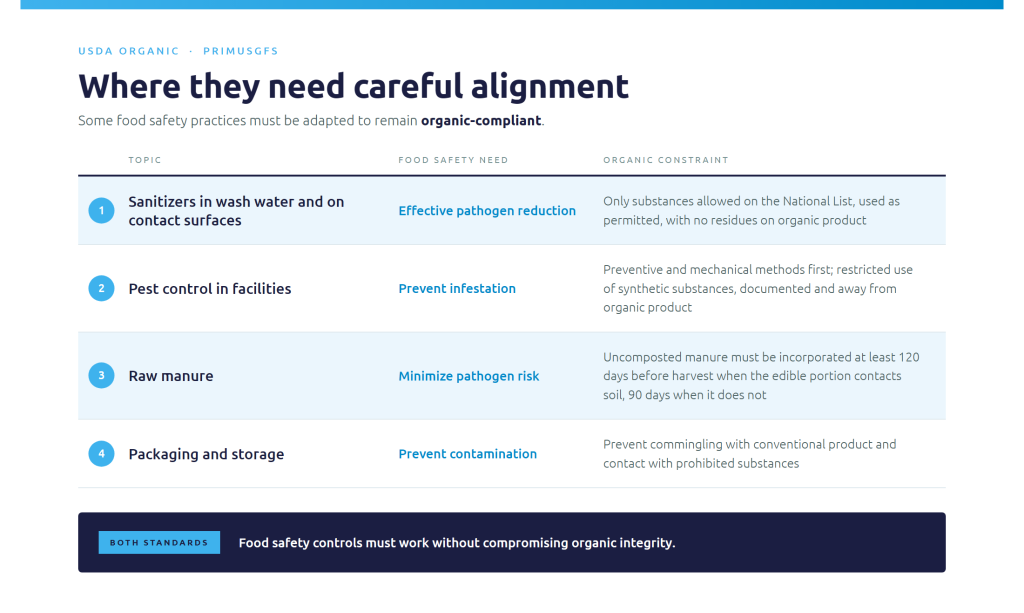
An inspection that covers both standards checks these points together, which reduces the risk of solving a food safety finding with an organic non-compliance, or the reverse.
A real case: when organic and food safety controls meet
In its May 2026 enforcement update, USDA described a 2025 case in which organic raspberries sold by a certified trader in Mexico to a large U.S. berry brand tested positive for a prohibited substance. The source was a certified grower that used shared spray equipment on nonorganic onion fields and did not clean it before use on organic fields. 191 cartons were destroyed before reaching the market. The trader introduced staff training, stronger supplier management and residue testing. The grower surrendered certification for the affected fields and now receives an additional inspection each year.
Equipment sanitation, supplier control and testing are requirements in both standards. Inspecting them together gives the operation one consistent view of the risk.
How a combined inspection works
- One application covering the organic scope and the PrimusGFS modules.
- Aligned document review of the Organic System Plan and the Food Safety Management System.
- One site visit scheduled during active operations, with time allocated to each standard.
- Separate reports and decisions. Each standard keeps its own checklist, reporting and certification decision.
- Two certificates, each verifiable in its own public database.
Benefits for the operation
- Fewer days of interruption during the season
- One audit calendar and one point of contact
- Shared records reviewed once, with consistent findings
- Lower travel costs when inspections are combined
- A single certification body that understands how the two standards interact
Combined certification with Control Union
Control Union Certifications is accredited by the USDA under the National Organic Program and certifies fresh produce operations under PrimusGFS. We offer combined USDA organic and PrimusGFS inspections to reduce disruption, with U.S.-based client support and scheduling around harvest seasons.